
Wheeling Previous Resident Sources
A Wheeling address history begins with the parcel, not a guessed name. The Village map identifies the county and parcel key. The county recording index then carries ownership backward, while local directories, newspapers, maps, and Village records add people or events tied to the address. Each source proves a different role, so a taxpayer, deed party, subscriber, and household member should never be treated as interchangeable.
| Source | Years It Covers | Where Held | What It Shows |
|---|---|---|---|
| Cook recorded instruments | Online work strongest from 1985 forward | Cook County Clerk portal; older microfilm and vault records | Parties, dates, PINs, legal descriptions |
| Lake recorded instruments | Online land route from 1980 forward | Lake County Clerk portal and office | Parties, document types, parcel links |
| Local directories | Named years include 1909, 1925, 1927-1928, 1933, 1966 | Illinois Digital Archives and Historical Society | Subscribers, addresses, phone listings |
| Local newspapers | 1956-1970 and 1977-2003 named runs | Historical Society and Indian Trails Library | Obituaries, family ties, dated events |
| Village archive leads | 1894 forward, with gaps | Historical Society; Village Clerk for official copies | Permits, minutes, assessments, maps |
For a recent transfer, start with the parcel and deed index. For a mid-century household, move sooner to directories and newspapers. Before Village incorporation, use township, county, church, cemetery, and land material. Federal census schedules can add released household detail, but a missing entry is not proof that a person was absent.
Access can be online, at a public counter, by mail, or through a staff lookup. Cook's recent index is the fastest first pass, but older instruments move to microfilm or vault material. Lake offers its own online and office routes. Library and Historical Society sources require a narrow reference request when a scan is absent. Village administrative records go to the Clerk or the department that created them.
Trace Wheeling Deeds Backward
Search the Wheeling Community Map Viewer by address or PIN, select the exact parcel, and record its county, township, boundary, and identifier. The parcel's county controls the next step. Cook and Lake tax cards, maps, and recording indexes answer different questions; none alone proves who occupied the property.
Open the newest conveyance in the correct county system. Copy the document number, executed and recorded dates, instrument type, party roles, legal description, PIN, and associated document. Then search the seller as a former buyer in an earlier period. A parcel split or consolidation can change the identifier, so retain old legal descriptions and plat references.
- Confirm the present PIN or PARID and legal description.
- Find the newest deed by parcel identifier, address, or owner.
- Search that deed's grantor as a grantee in an earlier date range.
- Repeat while the land description and associated records match.
- Ask the Clerk for microfilm, deed books, plats, or vault material when the online run ends.
- Grantor
- The party conveying an interest.
- Grantee
- The party receiving an interest.
- Chain of title
- The linked sequence of recorded transfers.
- Legal description
- Lot, block, subdivision, or survey wording that identifies land more firmly than a street label.
The Cook advanced recording search offers grantor, grantee, role, date, document-type, subdivision, and legal-description controls. Some plats, easements, annexations, and similar items require the Clerk's office.
Do not skip mortgages, releases, transfer-on-death instruments, or corrected deeds when they are linked to the parcel. They may explain a name change or apparent break without representing a sale. Read the instrument type and party role exactly as indexed. If a document image must be purchased, save the index citation first and order only the copy needed to resolve the chain.
The source screen below comes from the Cook County Clerk recordings system.
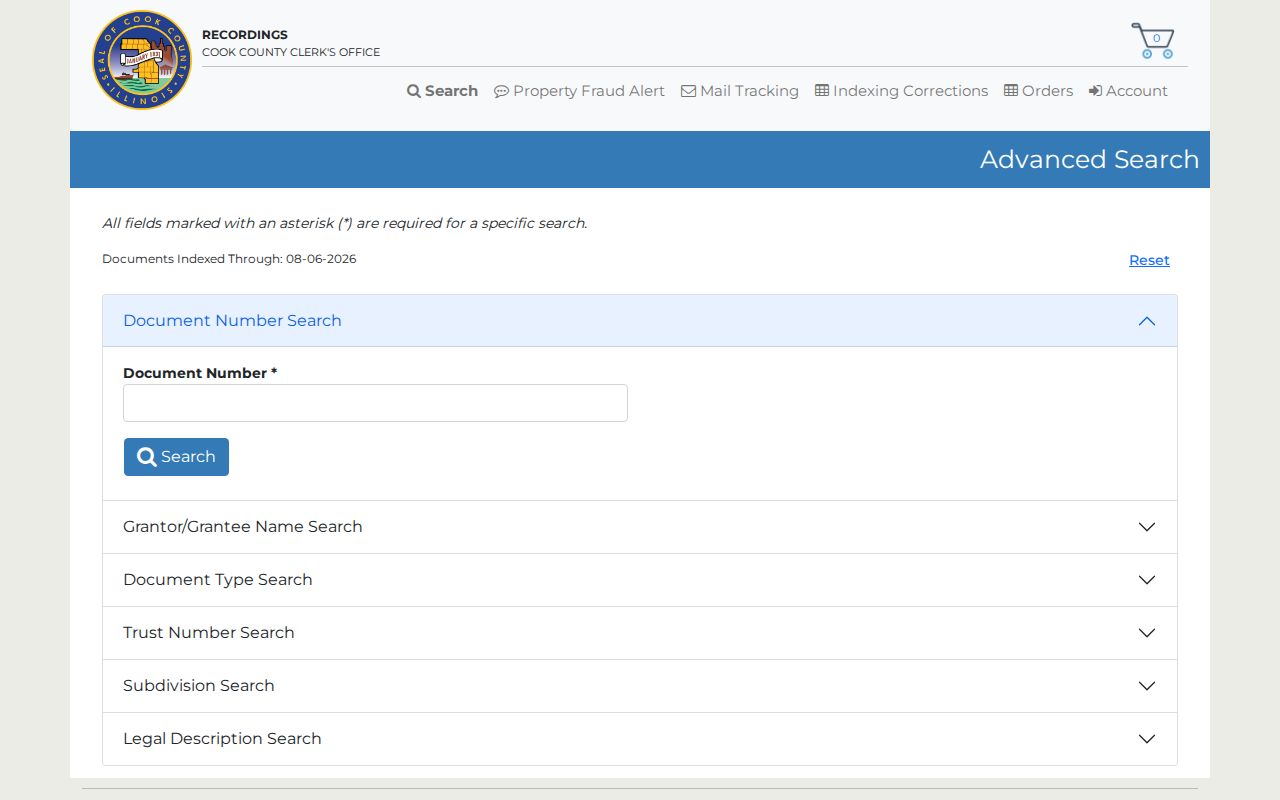
Its role and date fields help separate transactions, but an indexed address remains informational rather than guaranteed.
Lake County Past Resident Trail
The Lake County part of Wheeling cannot be traced through Cook records. Search the Lake County property system by parcel, owner, billing name, address, unit, or ZIP. Carry the PARID into the Lake County recordings search, and preserve the portal's certification-through date. Request an office copy when the screen provides only an index.
This successful capture comes from the Lake County Clerk official-records source.
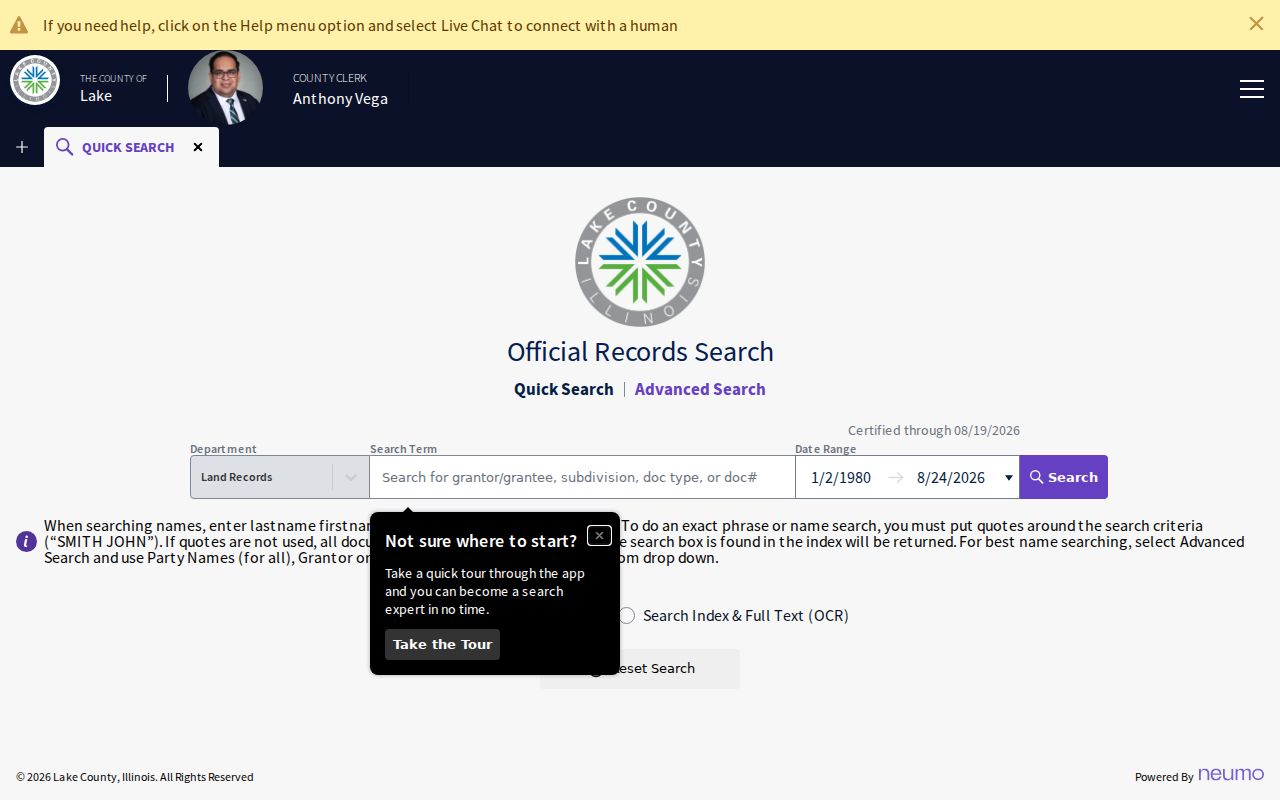
The quick and advanced routes support a separate Lake chain. Keep its dates and parcel identifiers apart from Cook results.
Wheeling Archives Bridge Missing Years
The Wheeling Historical Society archive offers name, keyword, and category browsing. Named leads include 1960 building permits, Village minutes from 1955 through 1960, special assessments from 1926 and 1929-1932, ordinance tickets from 1939-1941, cemetery files, business-address history, and newspapers. A category hit is only a lead. Request the exact object, date, page, and a clearer copy when a public scan is reduced.
The archive's browse surface appears in this Historical Society source.
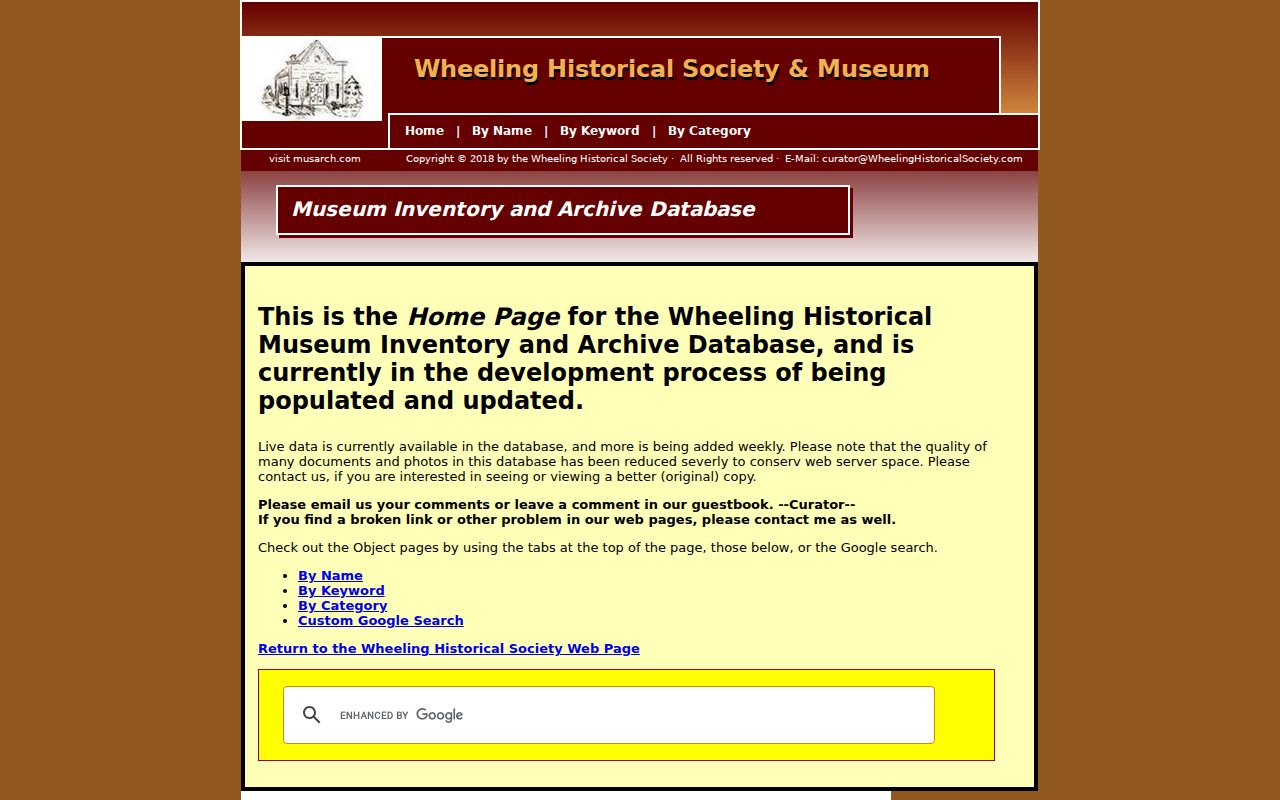
Its local categories can connect a parcel to a dated event, but every result needs its collection title and object identifier.
Indian Trails Public Library offers genealogy appointments and staff research requests. Send a narrow question with the address, name variants, date range, and collection title. The dated holdings survey mentions Haines directories, phone books from 1968 forward, maps, and newspapers, but staff should confirm present access and format.
The Historical Society database is live and still developing. Its scans may be reduced to conserve space. Ask for an original or higher-quality copy before transcribing a faint address, and identify whether the reply is an index entry, an image, or a curator's interpretation. That distinction matters when previous residents share a surname or when an old street label is hard to read.
Map Old Wheeling Addresses Carefully
A Library of Congress Sanborn volume from 1905 notes Wheeling among covered places, but that note does not prove a target house appears. Search the volume's place list and exact sheet. Use a found map for building shape and use context, not ownership. Historical Society material also points to maps around 1886 and 1902; ask for a title and sheet before drawing a claim.
These dates straddle the railroad era and Village incorporation in 1894. Before incorporation, search township, county, church, cemetery, newspaper, and land sources. After incorporation, Village minutes, permits, ordinances, assessments, and election material can add context. Never silently modernize an old street name.
Note: A map place note or archive category is a finding aid, not proof that the exact Wheeling parcel appears.
Wheeling Permits and Newspapers
A prior owner may vanish between deeds because the missing link is local, not countywide. Village permit, zoning, planning, assessment, ordinance, or meeting files can put a named applicant or event at a parcel on a date. No unrestricted public permit-by-address index was located. Ask Community Development or the Village Clerk for a defined address, record type, and period through the Illinois Freedom of Information Act route.
Newspapers work best as corroboration. Search the Historical Society's Wheeling Independent and Daily Herald indexes, then obtain the article through Indian Trails or the archive. Cite the paper, issue date, page, and the exact role stated. A news mention of a sale, fire, club event, or obituary may bridge the chain, yet it does not replace the recorded instrument.
Cemetery and interment records can connect relatives or supply a date for another search. Yearbooks can establish a dated school-community lead, but personal details about students should not be republished. Oral histories can suggest family names, roads, and institutions. Attribute the speaker, then compare the statement with a deed, map, newspaper, or Village record before adding it to an address chronology.
Document Wheeling History Gaps
A blank screen can mean the wrong county, an earlier PIN, a changed legal description, an item outside online coverage, a restricted instrument, or an incomplete archive database. It does not justify inserting a likely person. Log the portal, access date, county, fields used, date range, result, and next offline step.
For older Cook instruments, ask for the exact microfilm or vault series by PIN and legal description. For Lake material, request the pre-online index or office copy. Private library and Historical Society collections follow their own reference policies rather than FOIA. A clear gap is more useful than a smooth but unsupported list of past residents.
Search notes should also preserve negative results. Write down whether a name, PIN, street, subdivision, or date range was used and whether the portal was current or under maintenance. If the parcel changed counties, identifiers, or legal form, start a new branch in the chronology. Never merge two branches merely because the street number looks alike.
Confirm Wheeling Past Households
Directories can add listed subscribers who never appear in the ownership chain. The January 1909 digital telephone directory covers Arlington Heights and Wheeling. The Historical Society also names 1925 telephone material, 1927-1928 and 1966 information directories, and a reproduced 1933 page. Record the year, page, printed name, address, and phone exchange without claiming a complete household.
Pair that dated listing with the nearest released census, a deed, and a newspaper or cemetery lead. The Wheeling Independent material covers 1956-1970, while the Historical Society lists a Daily Herald index for 1977-2003. Obituaries may name relatives and former communities; cemetery files may establish interment or family association. Neither alone proves residence on the event date. Collection details belong on the Wheeling city directory page.
A practical chronology separates ownership from occupancy in parallel columns. Put each deed transfer on one line and each directory, census, permit, or newspaper appearance on another. Include the date and source role. Where the two lines agree, the address history gains support. Where they differ, keep both facts and investigate rather than forcing the subscriber to be the owner.
Lawful use. Research previous residents for family history, estate work, or a Wheeling property's story. Never use an address trail to watch, harass, or expose a living person.